
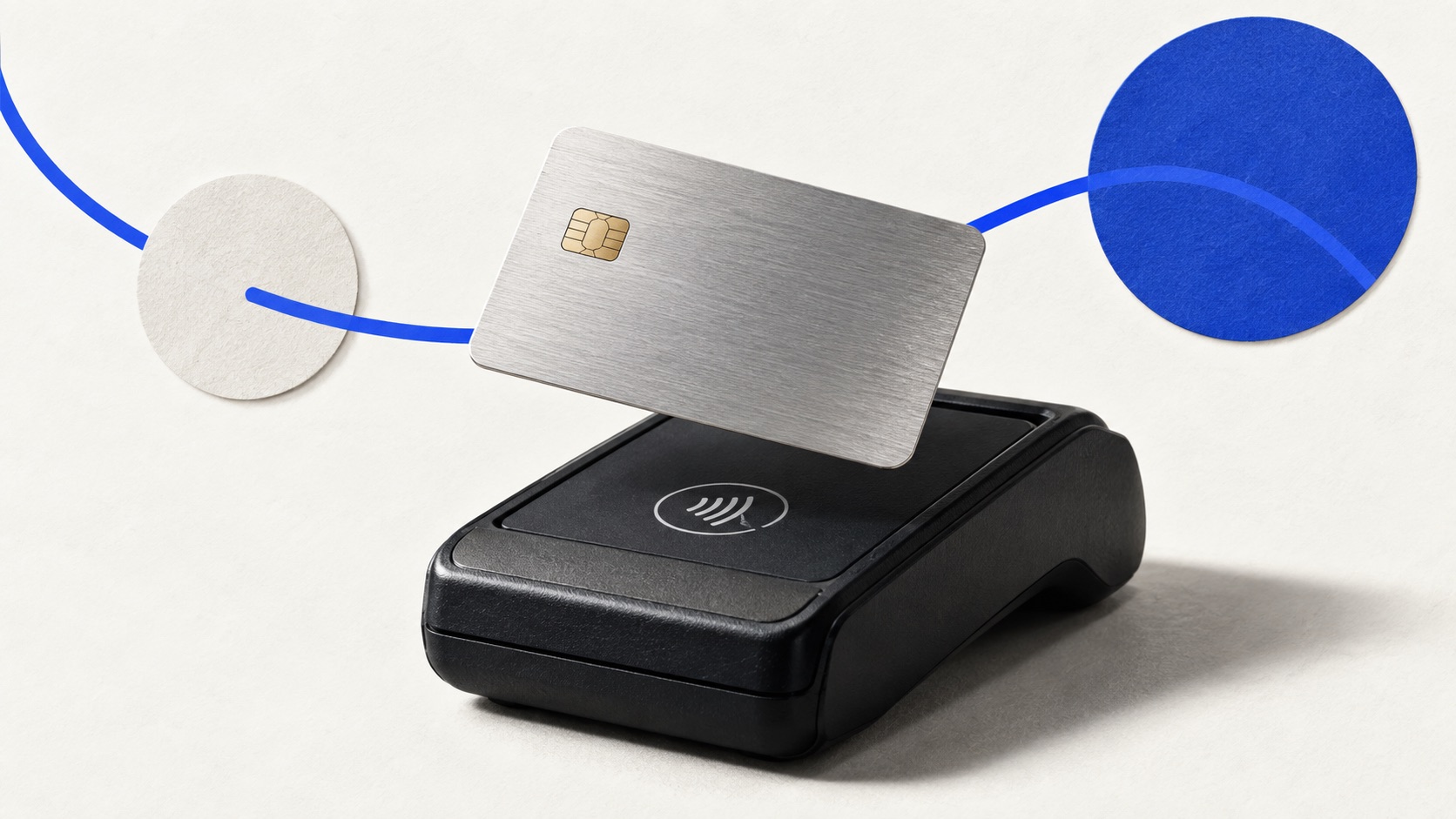
The terminal says approved, you collect your coffee and the bank app shows a transaction. To you, the payment is finished. Behind the counter, several systems still have work to do before the merchant receives its payout.
A contactless tap starts a short exchange between the card or phone and the terminal. It does not directly move money from your account into the shop’s bank account.
The tap supplies payment information
Contactless cards and compatible phones communicate with the terminal using near-field communication. EMVCo’s contactless explanation describes a transaction-specific security code used to help protect the exchange.
A phone wallet may use a payment token in place of the underlying card number. The exact arrangement depends on the wallet, issuer and payment network. Authenticating on your phone is also distinct from the issuer deciding whether to approve the transaction.
The terminal passes the payment into the merchant’s processing setup. Depending on the arrangement, a processor and acquiring institution connect the merchant to the card network and the cardholder’s issuer.
Approval answers a limited question
Authorization asks whether the payment can proceed under the applicable checks. The issuer may consider available funds or credit, card status and fraud signals. An approval can place a hold on the amount.
That hold can reduce the balance available to spend before the transaction becomes a posted charge. This is why an app can show a pending payment almost immediately.
Approval is not the same as an irrevocable final payment. The merchant may cancel, capture a different permitted amount or fail to complete the next stage. Network rules and the circumstances of the purchase determine what is allowed.
Capture starts the collection process
Capture tells the payment system to collect an authorized payment. Some merchants do this as part of their ordinary checkout flow. Others separate authorization and capture.
A hotel is a useful example. It may reserve an amount before the final bill is known. A shop may authorize an online purchase before shipping it. Stripe’s documentation on payment holds describes this separation and the need to capture within the applicable authorization window.
Do not assume one universal hold period. Timing varies with the payment method, network, transaction type and provider arrangement.
Settlement and payout are different clocks
Clearing communicates transaction details used to calculate what the participating institutions owe. Settlement handles the transfer of funds between them. The merchant’s processor then pays out according to its own schedule and account conditions.
A merchant dashboard can therefore show a successful payment while the bank account has not yet received the payout. The customer-facing status and merchant cash availability describe different points in the process.
Refunds have their own path too. A merchant can initiate one before the customer’s bank displays the credit. The receipt, processor status and bank posting may not update at the same moment.
Why the amount can look different
Some businesses authorize an estimated amount. A final charge can reflect the completed purchase, subject to the rules of that transaction. Currency conversion may also affect what the cardholder sees.
If a hold remains alongside a final charge, it can look like a duplicate before the records resolve. That is not a reason to dismiss an unexpected debit. Compare the dates, amounts and transaction statuses, then ask the merchant or issuer to explain the specific entries.
Our guide to approved but pending payments follows those statuses in more detail. Keep the merchant receipt until the bank record matches the purchase.